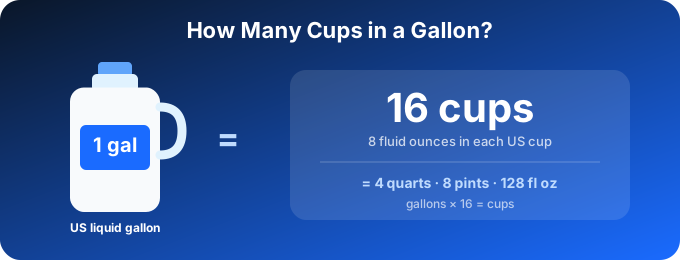
If a recipe, a punch bowl or a water-tracking goal is measured in gallons and your measuring tool is a cup, you need one number: how many cups in a gallon. In the US, the answer is 16 cups. The rest of this guide shows where that number comes from, gives you a chart for other amounts, and explains why a few cups and gallons around the world give a different count.
📋 Table of Contents
How many cups in a gallon, and how it breaks down
One US liquid gallon equals 16 US cups, and the number of cups in a gallon of liquid is the same whether it is water, milk, juice, stock or oil. NIST Handbook 44 (Appendix C) lists the gallon as 231 cubic inches made up of 4 quarts. Each quart splits into 2 pints, and each pint into 2 cups, so 4 × 2 × 2 gives 16. Put the other way round, 16 cups equal 1 gallon, no matter which liquid is in the jug.
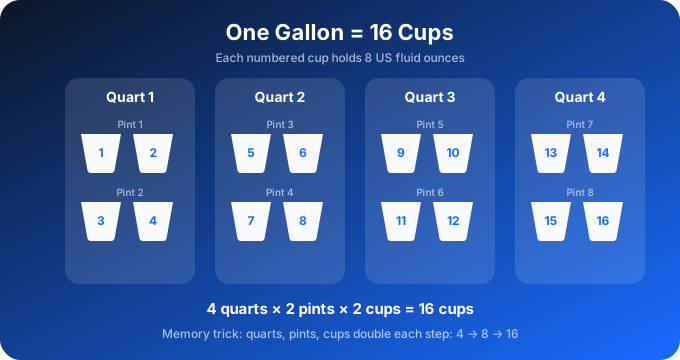
A handy way to remember it: quarts, pints and cups simply double at each step, 4 then 8 then 16. If you ever blank on one of them, rebuild it from the gallon.
| One US gallon equals | Amount |
|---|---|
| Quarts | 4 quarts |
| Pints | 8 pints |
| Cups | 16 cups |
| Fluid ounces | 128 fl oz |
| Tablespoons | 256 tbsp |
| Teaspoons | 768 tsp |
| Milliliters | ≈ 3,785 mL |
How to convert gallons to cups and back
📐 Formula
Cups = Gallons × 16
Gallons = Cups ÷ 16
Example: 2.5 gallons × 16 = 40 cups. In reverse, 28 cups ÷ 16 = 1.75 gallons, which is 1 gallon and 3 quarts (12 cups). To skip the arithmetic, type any amount into our gallons to cups converter.
Cups to gallons
Divide by 16, or think in quarts first: every 4 cups is a quart, and every 4 quarts is a gallon. Longer lists of cups work the same way.
| Cups | Gallons | In gallons and cups |
|---|---|---|
| 4 cups | 0.25 gal | 1 quart |
| 8 cups | 0.5 gal | 2 quarts (½ gallon) |
| 12 cups | 0.75 gal | 3 quarts (¾ gallon) |
| 20 cups | 1.25 gal | 1 gal 4 cups |
| 28 cups | 1.75 gal | 1 gal 12 cups |
| 40 cups | 2.5 gal | 2 gal 8 cups |
| 100 cups | 6.25 gal | 6 gal 4 cups |
Gallons to cups chart
These are the amounts people look up most, including the fractions you meet on recipes and cartons. Thirds do not divide into whole cups, so they show as fractions.
| Gallons | Cups | Fluid ounces | Common container |
|---|---|---|---|
| ⅛ gal | 2 cups | 16 fl oz | — |
| ¼ gal | 4 cups | 32 fl oz | 1 quart |
| ⅓ gal | 5⅓ cups | 42⅔ fl oz | — |
| ½ gal | 8 cups | 64 fl oz | half-gallon carton |
| ⅔ gal | 10⅔ cups | 85⅓ fl oz | — |
| ¾ gal | 12 cups | 96 fl oz | — |
| 1 gal | 16 cups | 128 fl oz | 1-gallon jug |
| 1½ gal | 24 cups | 192 fl oz | — |
| 2 gal | 32 cups | 256 fl oz | — |
| 2½ gal | 40 cups | 320 fl oz | — |
| 3 gal | 48 cups | 384 fl oz | — |
| 4 gal | 64 cups | 512 fl oz | — |
| 5 gal | 80 cups | 640 fl oz | 5-gallon bucket |
| 10 gal | 160 cups | 1,280 fl oz | — |
Do all cups hold the same amount?
The 16 figure assumes the US customary cup, which is 8 US fluid ounces or about 236.6 mL. Other "cups" are close but not identical, and that adds up over a whole gallon. US nutrition labels define a cup as 240 mL, according to the FDA's metric-equivalents guidance, and many recipes outside the US use a 250 mL metric cup.
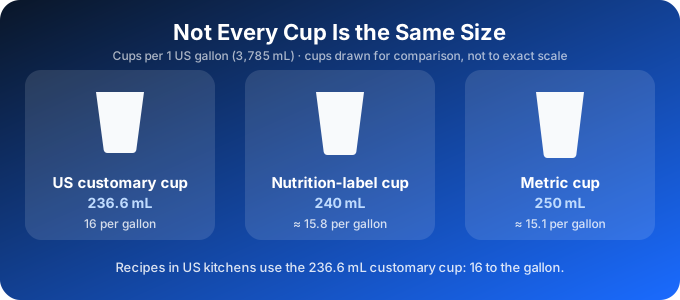
| Type of cup | Size | Cups per US gallon |
|---|---|---|
| US customary cup | 8 fl oz (≈ 236.6 mL) | 16 |
| US nutrition-label cup | 240 mL | ≈ 15.8 |
| Metric cup | 250 mL | ≈ 15.1 |
| Coffee-maker "cup" (often 5 to 6 fl oz) | ≈ 148 to 177 mL | ≈ 21.3 to 25.6 |
For cooking in a US kitchen, stick with 16. The coffee-maker row matters if you are brewing a gallon for a crowd: a machine that counts 6-ounce "cups" will report about 21 of them for the same gallon.
US, imperial and dry gallons
"Gallon" is not one size. The US liquid gallon (3.785 L) is the one that holds 16 US cups. The UK imperial gallon is bigger at about 4.546 L, which is roughly 19.2 US cups, or about 18.2 metric cups. The US dry gallon, used for dry produce rather than drinks, is about 4.405 L, or roughly 18.6 US cups. If you have seen "18.6 cups in a gallon" somewhere, that was the dry gallon, which does not apply to milk, water or other liquids. Our US pint vs UK pint comparison shows the same US and UK split at the pint level.
Where 16 cups comes in handy
Scaling recipes is the classic use. A soup, lemonade or punch recipe written in cups becomes a gallon batch when it totals 16 cups; the chart above does the same job for 2, 3 or 5 gallons. If you only have a fluid-ounce measure, our oz to cups converter bridges the gap, and our liquid measurement conversion chart puts every unit on one page.
Water tracking is the other big one. A gallon of water is 16 eight-ounce cups, which makes it an easy benchmark to picture; whether it is the right target for you is a separate question, which our daily water intake guide covers.