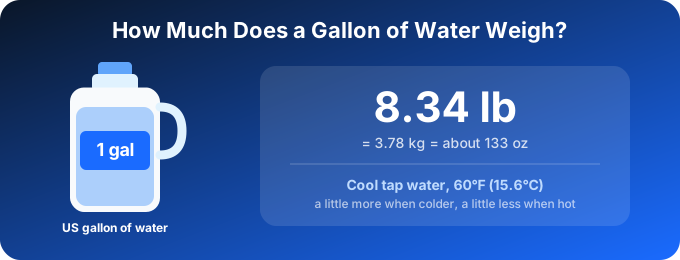
The 8.34 figure is a rounded number for cool tap water. It shifts a little with temperature, more with what is dissolved in the water, and by a lot if you mean a UK gallon. This guide gives the right number for each case, plus a chart for jugs, tanks and drums.
📋 Table of Contents
A gallon of water in pounds, kilograms and ounces
At everyday cool-to-room temperatures, a US gallon of water weighs about 8.34 pounds. That comes straight from density: a gallon is 3,785 mL and water is close to 1 g/mL, so the mass lands just under 3.8 kg. Metric is the easy version to remember, since 1 liter of water weighs about 1 kilogram, or 2.2 pounds.
| Unit | One US gallon of water weighs |
|---|---|
| Pounds | ≈ 8.34 lb |
| Kilograms | ≈ 3.78 kg |
| Grams | ≈ 3,782 g |
| Ounces (weight) | ≈ 133.4 oz |
That 133 ounces is weight, which is not the 128 fluid ounces of volume a gallon holds (our gallon to oz converter covers the volume side). The two differ because ounces of weight and fluid ounces measure different things, a distinction our fluid ounce vs ounce guide explains in full.
📐 Quick estimate
Pounds ≈ Gallons × 8.34
Kilograms ≈ Gallons × 3.78
No calculator? Multiply the gallons by 8, then add a third of the gallons. For 12 gallons that is 96 + 4 = 100 lb, against an exact 100.1 lb.
Why temperature changes the weight
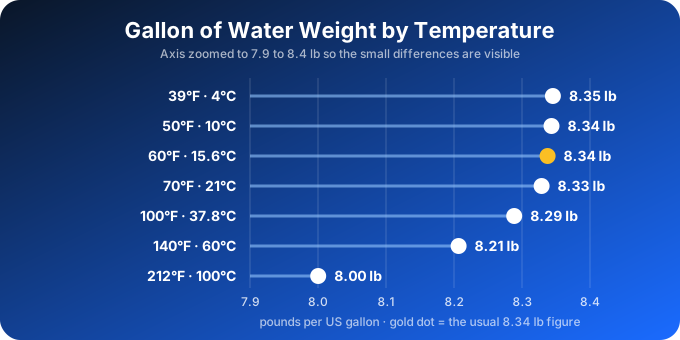
Water expands as it warms, so a gallon of warm water holds slightly less mass than a gallon of cold water. The USGS Water Science School lists water at its densest at about 4°C (39°F), falling steadily from there. Applying those densities to a 3,785 mL gallon gives the table below, and the highlighted row is the cool-tap-water case behind the usual 8.34 lb.
| Temperature | Density (g/mL) | Gallon weighs | In kilograms |
|---|---|---|---|
| 39°F / 4.0°C | 1.00000 | 8.35 lb | 3.79 kg |
| 50°F / 10°C | 0.99975 | 8.34 lb | 3.78 kg |
| 60°F / 15.6°C | 0.99907 | 8.34 lb | 3.78 kg |
| 70°F / 21°C | 0.99802 | 8.33 lb | 3.78 kg |
| 100°F / 37.8°C | 0.99318 | 8.29 lb | 3.76 kg |
| 140°F / 60°C | 0.98338 | 8.21 lb | 3.72 kg |
| 212°F / 100°C | 0.95865 | 8.00 lb | 3.63 kg |
In practice the spread is small. From a cold tap to a hot one the change is a few hundredths of a pound, and even boiling water is only about a third of a pound lighter than ice-cold water.
Ice, seawater, tap and distilled water
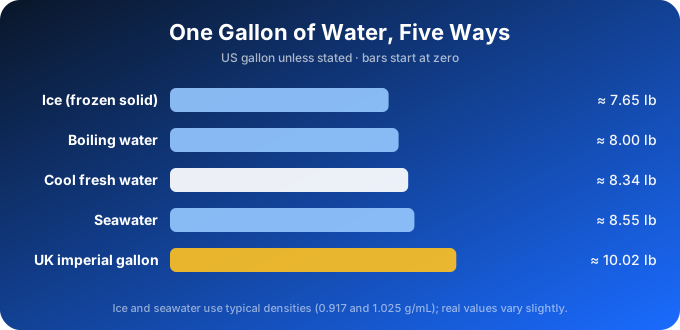
Tap, bottled and distilled water all weigh essentially the same. The dissolved minerals in typical drinking water add well under a hundredth of a pound per gallon, so a gallon of distilled water is about 8.34 lb too.
Two forms are genuinely different. Dissolved salt makes a gallon heavier, and the USGS notes that ocean water is denser than pure water. Using a typical seawater density of about 1.025 g/mL, a gallon weighs roughly 8.55 lb. Ice goes the other way: it is roughly 90 percent as dense as liquid water, so a gallon of solid ice weighs about 7.5 to 7.7 lb. Freezing does not remove any weight, though. The same water just takes up about 9 percent more space, which is why a full, sealed bottle can split in the freezer.
US gallon vs UK gallon
The 8.34 lb figure belongs to the US gallon. A UK imperial gallon holds 4.546 liters, about 20 percent more, so water in it weighs about 10.02 lb (4.55 kg). That near-round 10 pounds is no accident, because the UK gallon was originally defined as the volume of 10 pounds of water, a history covered in our US pint vs UK pint comparison. If a UK source says a gallon of water weighs 10 pounds, it is using its own gallon.
Water weight chart: from a cup to 1,000 gallons
These weights are for water only, calculated from 8.34 lb (3.78 kg) per gallon. Containers, tanks and fittings add their own weight on top.
| Amount of water | Weight (lb) | Weight (kg) | Example |
|---|---|---|---|
| 1 cup | 0.52 lb | 0.24 kg | — |
| 1 pint | 1.04 lb | 0.47 kg | — |
| 1 quart | 2.08 lb | 0.95 kg | — |
| ½ gallon | 4.17 lb | 1.89 kg | half-gallon carton |
| 1 gallon | 8.34 lb | 3.78 kg | 1-gallon jug |
| 5 gallons | 41.7 lb | 18.9 kg | 5-gallon bottle or bucket |
| 7 gallons | 58.4 lb | 26.5 kg | large camping jug |
| 10 gallons | 83.4 lb | 37.8 kg | 10-gallon aquarium |
| 20 gallons | 166.8 lb | 75.6 kg | 20-gallon aquarium |
| 40 gallons | 333.5 lb | 151.3 kg | 40-gallon water heater |
| 55 gallons | 458.6 lb | 208.0 kg | 55-gallon drum |
| 275 gallons | 2,293 lb | 1,040 kg | 275-gallon IBC tote |
| 1,000 gallons | 8,338 lb | 3,782 kg | 1,000-gallon tank |