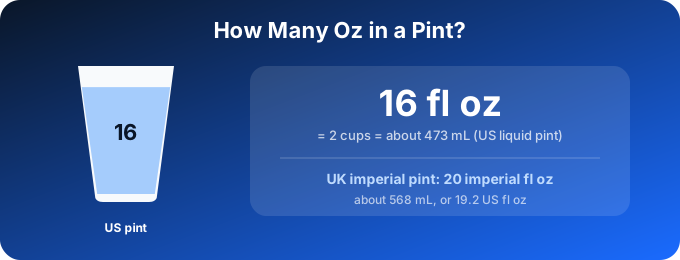
If you have ever wondered how many oz in a pint, the US answer is 16 fluid ounces, which is 2 cups or about 473 mL. That part is simple, and our converters will do the sums for any amount. What trips people up is everything around it: pints that hold 20 ounces, ounces that measure weight instead of volume, and bottles sold in milliliters. This guide covers those.
📋 Table of Contents
Why a pint is not always 16 ounces
The US liquid pint is one-eighth of a US gallon. NIST Handbook 44 (Appendix C) defines that gallon as 231 cubic inches, so a pint is 28.875 cubic inches, which works out to 16 fluid ounces. For any US amount, fluid ounces = pints × 16, and our pint to oz converter applies it instantly.
The catch is that "pint" is also the name of two other units, and the ounce count changes with them.
| Pint | Ounces in its own system | Milliliters | In US fluid ounces |
|---|---|---|---|
| US liquid pint | 16 US fl oz | ≈ 473.2 | 16 |
| UK imperial pint | 20 imperial fl oz | ≈ 568.3 | ≈ 19.2 |
| US dry pint | not measured in fl oz | ≈ 550.6 | ≈ 18.6 |
One mistake is worth naming. Because 20 is 25% more than 16, it is easy to read the UK pint as 25% bigger. It is not, because an imperial fluid ounce is smaller than a US one. By volume the UK pint is about 20% larger (568 mL against 473 mL). Our US pint vs UK pint comparison goes through the full difference. The dry pint, used for berries and similar produce, is a volume too, so it is not interchangeable with a liquid pint.
What does a pint weigh?
Fluid ounces measure volume, while the ounces on a kitchen scale measure weight. An old rhyme says "a pint's a pound the world around", and for water it comes close: a US pint of water weighs about 16.7 oz, or 1.04 lb. For other liquids the rhyme drifts, because a pint always takes up the same space but heavier liquids pack more weight into it.
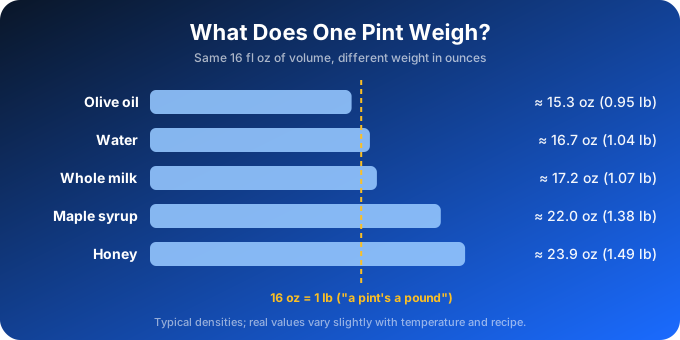
| Liquid (1 US pint) | Density (g/mL) | Weight (oz) | Weight (lb) |
|---|---|---|---|
| Olive oil | 0.915 | ≈ 15.3 oz | ≈ 0.95 lb |
| Water (20°C) | 0.998 | ≈ 16.7 oz | ≈ 1.04 lb |
| Whole milk | 1.030 | ≈ 17.2 oz | ≈ 1.07 lb |
| Maple syrup | 1.320 | ≈ 22.0 oz | ≈ 1.38 lb |
| Honey | 1.430 | ≈ 23.9 oz | ≈ 1.49 lb |
These use typical densities, so real products vary a little with temperature and recipe. When a recipe lists a liquid in ounces, it almost always means fluid ounces.
Pints and metric containers
Most drinks are now sold in milliliters or liters, so you rarely meet a container that is exactly one pint. The closest is the 500 mL bottle, which holds a little more than a pint, and which is why bottled water is commonly labeled 16.9 fl oz instead of 16. Some US bars also call a 500 mL glass a pint.
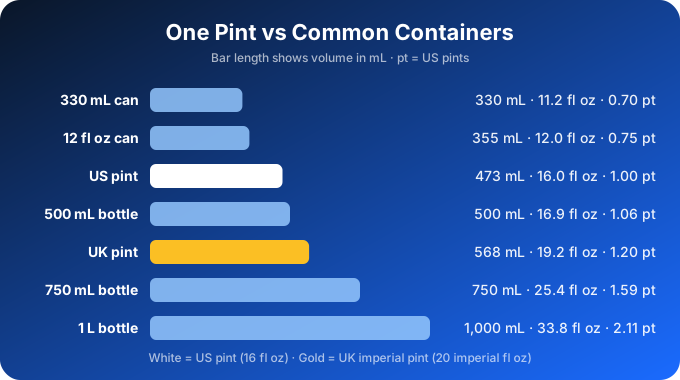
| Container | US fluid ounces | US pints |
|---|---|---|
| 330 mL can | 11.2 fl oz | 0.70 pints |
| 12 fl oz can | 12.0 fl oz | 0.75 pints |
| 500 mL bottle | 16.9 fl oz | 1.06 pints |
| 750 mL bottle | 25.4 fl oz | 1.59 pints |
| 1 L bottle | 33.8 fl oz | 2.11 pints |
| 1.5 L bottle | 50.7 fl oz | 3.17 pints |
| 2 L bottle | 67.6 fl oz | 4.23 pints |